The Myth of the Equity-Only Renovation
August 4, 2026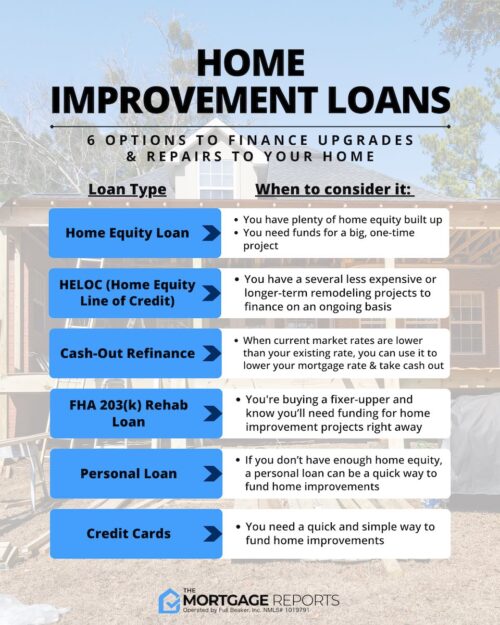
Most homeowners mistakenly believe that a major renovation requires tapping into their home’s equity through a HELOC or a cash-out refinance. This assumption is a convenient lie told by lenders who prefer the long-term security of collateralized debt. In reality, using your house as collateral to fix a roof or remodel a kitchen often introduces more risk than the project itself solves.
Unsecured financing has become the primary vehicle for rapid home upgrades. By decoupling the debt from the physical property, homeowners avoid the nightmare of a second mortgage if a contractor goes belly-up or a project runs over budget. It is a cleaner, faster, and often more sensible way to manage capital for residential improvements.
The distinction between a general personal loan and a dedicated home improvement loan is often more semantic than structural. Both are typically unsecured, meaning you don’t put your roof on the line to get the cash. But the way lenders price these products depends heavily on the intended use of the funds and the borrower’s credit profile.
When a homeowner decides to replace an HVAC system or a kitchen backsplash, they are looking for liquidity. They want the money in their bank account before the contractor arrives with a deposit invoice. This speed is a primary driver for the rise in unsecured lending across the United States.
The Mechanics of Unsecured Capital
Traditional financing often feels like a slow-moving beast. You apply for a loan, wait for an appraisal, and then spend weeks waiting for a closing date. This process is fine for a new house, but it is overkill for a bathroom remodel or a new deck.
Personal loans for home improvements change that timeline. Many lenders focus on speed as their primary product feature. For example, Navy Federal Credit Union allows for funding on the same day as application in many instances. That speed is vital when a plumbing emergency requires immediate capital to prevent structural damage.
The math of these loans is straightforward. You borrow a fixed amount, you pay a fixed rate, and the debt is paid back in equal monthly installments. There is no “draw” period like there is with a line of credit. You get the lump sum, and you are responsible for the whole amount from day one.
But the trade-off for this speed is the interest rate. Because the lender has no collateral to seize if you stop paying, they charge a premium. You are paying for the convenience of not having to undergo a formal home appraisal. It is a trade-off between interest expense and administrative simplicity.
Credit scores dictate the entire experience. If your score is in the high 700s, you can negotiate terms that rival traditional mortgage products. If it is lower, the interest rates can become punitive. This is why lenders are so meticulous about “credit considerations” during the underwriting process.
Consider the current market landscape:
- High-limit options: Some lenders cater specifically to large-scale renovations, offering unsecured funding up to $100,000 or more for those who don’t want to touch their home equity.
- Small-scale options: For minor repairs or appliance replacements, smaller amounts are more common, often with no origination fees to keep the cost of borrowing low.
- Fixed-rate stability: Unlike credit cards, these loans provide a predictable end date, which helps with long-term budgeting.
Comparing the Lending Landscape
Not all personal loans are built for home improvement. Some are general-purpose, while others are specifically branded to attract renovators. This branding often reflects the terms being offered to the consumer. It is important to look past the marketing language to see the actual numbers.
Take, for instance, US Bank offers home improvement personal loans with an APR as low as 9.24% and amounts reaching up to $50,000. They make it clear that no collateral is required. This is the standard for the modern “unsecured” model.
Then there is the Discover model. They offer up to $40,000 for home remodels and repairs, and they specifically highlight the absence of an origination fee. An origination fee is essentially a “convenience tax” that lenders subtract from your loan proceeds before you even see the money. If you need exactly $30,000, and the lender charges a 5% fee, you only walk away with $28,500. That is a massive difference in a real-world construction budget.
The table below compares some of the general terms found in current market offerings:
| Lender/Type | Max Amount (Approx) | Key Feature |
|---|---|---|
| High-Limit Personal Loans | $100,000+ | Designed for major renovations |
| Discover-style loans | $40,000 | No origination fees |
| Standard Home Improvement | $50,000 | Unsecured, no collateral |
It is a mistake to assume the lowest APR is the best deal. Always look at the total cost of credit. A loan with a slightly higher rate but no origination fee might actually be cheaper over a three-year term than a “low rate” loan that eats 5% of your capital upfront.
If you are looking for specific local advice or regional rates, checking resources like texasloanstoday.com can provide a sense of the geographic variations in lending appetite. Rates vary wildly depending on whether you are in a high-cost metropolitan area or a rural county.
The Hidden Cost of Speed
Speed is a double-edged sword in the lending world. When you can get money on the same day, you are likely moving through an automated underwriting system. These systems are efficient, but they are not nuanced. They don’t care that your income is slightly irregular due to seasonal bonuses; they only see the digits in your bank account.
This automation is why credit scores are the absolute king of the unsecured market. If your score is borderline, you might get an approval, but the interest rate will be significantly higher than the advertised “as low as” rates. Never build a renovation budget based on the best possible rate you might see on a website. Build it based on the rate you actually qualify for.
And there is the issue of the “unsecured” nature itself. Because there is no collateral, the lender’s recourse is limited to collections and legal action against your assets. They cannot simply take your house through a foreclosure process. Because of this, they are much more aggressive about monitoring your financial health through your credit report.
I once spoke with a contractor who dealt with “loan-heavy” clients. He noted that people who used personal loans often felt a sense of urgency to start the project immediately because the cash was already sitting in their account. This urgency can lead to poor decisions, such as skipping the second round of quotes to get the work started before the money “feels” spent.
The psychological aspect of home improvement financing is real. When you use a HELOC, you are spending “your” money, your equity. When you use a personal loan, you are spending the bank’s money. The mental barrier to spending a $50,000 loan is often lower than the barrier to taking out a second mortgage, which can lead to “scope creep” in your renovation plans.
Avoiding the Debt Trap of Renovations
The biggest risk in home improvement is not the interest rate; it is the “unfinished project” syndrome. You start with a plan to replace the flooring, but then you see the baseboards look a bit dated. Then you think the lighting should be changed. Suddenly, a $10,000 project has turned into a $25,000 project.
If you are using an unsecured loan, you are adding that extra cost directly to your monthly debt obligation. Unlike a mortgage, which can be paid off over thirty years, personal loans are designed to be paid back quickly, usually in three to seven years. A sudden jump in the loan amount can make your monthly payment jump significantly.
To mitigate this, you should treat your renovation budget as a fixed, non-negotiable entity. Use a lump-sum personal loan to cover the known costs, but keep a separate “emergency” fund in a high-yield savings account for the inevitable surprises behind the walls. Do not rely on a credit card to cover the “oh, it’s actually $2,000 more than we thought” moments.
Consider these practical steps before signing any loan agreement:
- Get at least three firm, written quotes from contractors before you finalize your loan amount.
- Calculate your “break-even” point. If the renovation doesn’t add value to the home, you are essentially paying interest to upgrade a depreciating asset.
- Check if there are prepayment penalties. Most modern personal loans don’t have them, but you shouldn’t assume.
- Verify the total APR, which includes any mandatory fees, not just the interest rate.
One of the most effective ways to protect your finances is to ensure the loan amount matches the project scope. If you need $35,000, don’t take a $50,000 loan just because the monthly payment seems manageable. You are simply paying interest on money you didn’t need.
The Real Value of the Upgrade
At the end of the day, home improvement is about more than just aesthetics. It is about the utility of the space. A new kitchen isn’t just for show; it’s about functional efficiency. A new roof isn’t a luxury; it’s a necessity for structural integrity. The financing method is merely the tool you use to achieve that utility.
If the financing is structured correctly, the loan should be a bridge to a more valuable and functional asset. If the financing is rushed, or if the borrower fails to account for the total cost of credit, the loan becomes a weight. It is a tool that works both ways.
The rise in high-limit, unsecured lending is a sign of a maturing market. People want efficiency and they want to keep their equity untouched. While the interest rates are higher than a mortgage, the lack of collateral and the speed of funding make it the logical choice for the modern homeowner. Just don’t let the ease of the process blind you to the reality of the debt.
Smart borrowers use these loans as surgical tools, not blunt instruments.
This entry was posted in Uncategorized. Bookmark the permalink.Comments are closed.